Time dilation
Each of you sees the other’s clock running slow. That sounds like a contradiction, and the way out is the lesson you just read.
- Explain how both observers can see the other’s clock running slow without contradiction
- Resolve the twin paradox by pointing at what is actually asymmetric about the journey
- Say what proper time is and why it, rather than duration, is the thing everyone agrees on
You already have the result. A clock moving past you ticks slowly, by the factor γ = 1/√(1−v²/c²). The light clock forced it, and the principle of relativity forbids any other kind of clock from disagreeing — including the chemical ones you are made of.
The same clocks, wound up to 0.9c. Let the counters run for a while — at this speed the moving clock manages fewer than half the ticks.
The part that sounds impossible
Now the question that makes people give up on relativity. If your clock runs slow according to me, what does my clock look like according to you? The answer is: slow. By exactly the same factor.
That is not a figure of speech or a measurement artefact. The first postulate demands it. If there were any asymmetry — if one of us genuinely had the faster clock — then comparing them would reveal which of us was really moving, and that is exactly what no experiment is permitted to establish. So the slowing has to run both ways, or relativity is false.
Which sounds like a plain contradiction until you ask what it would take to actually catch it out. You would need the two clocks side by side, compared directly, twice — with them separated in between. And to say "your clock reads less than mine right now" while you are far away, you need a definition of right now stretched across a distance, between two people in relative motion.
One of them must really be slow. The symmetry is just us being unable to tell which.
There is no hidden fact being concealed. "Slow" is not a property a clock has; it is a relation between a clock and an observer, like "to my left". Two people can each be to the other’s left with no contradiction, because left is not a property of a person. The only question with a frame-independent answer is what a clock reads when it is brought back and put next to another one — and relativity answers that unambiguously.
Bringing the clocks back together
In 1911 Paul Langevin sharpened the problem into the form everybody now knows. Do not merely fly past. Fly out, turn around, and come home. Now the two clocks are side by side again, in the same place at the same moment, with nothing left to interpret. One of them has to read less.
The journey drawn as a map of space and time — time runs up the page. Watch the dashed line: that is the set of events the traveller currently calls "now". Pay particular attention to the moment of turnaround.
The thing everyone agrees on
There is a cleaner way to say all of this that avoids the arguments entirely. Stop asking whose clock is slow. Every object carries its own clock along its own path through spacetime, and what that clock reads is its proper time. Proper time is not a matter of perspective: every observer, in every frame, calculates the same value for how much a given clock ticked between two given events.
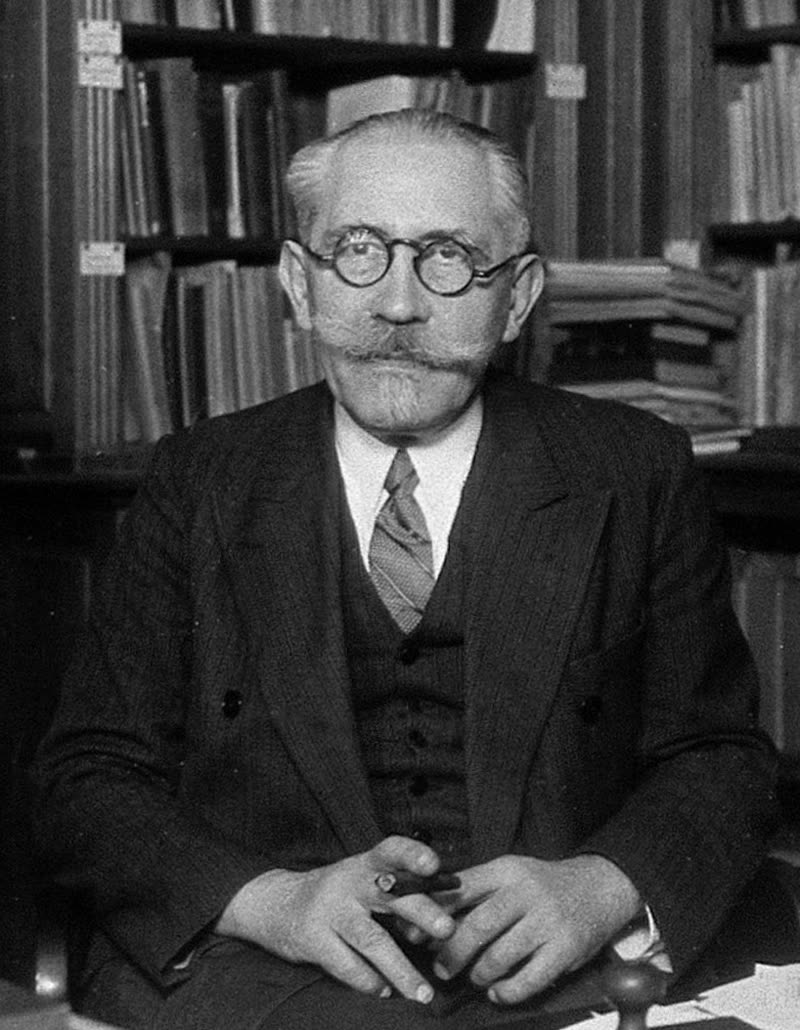
Henri Manuel, 2015-07-01 08:14:32. CC BY 4.0
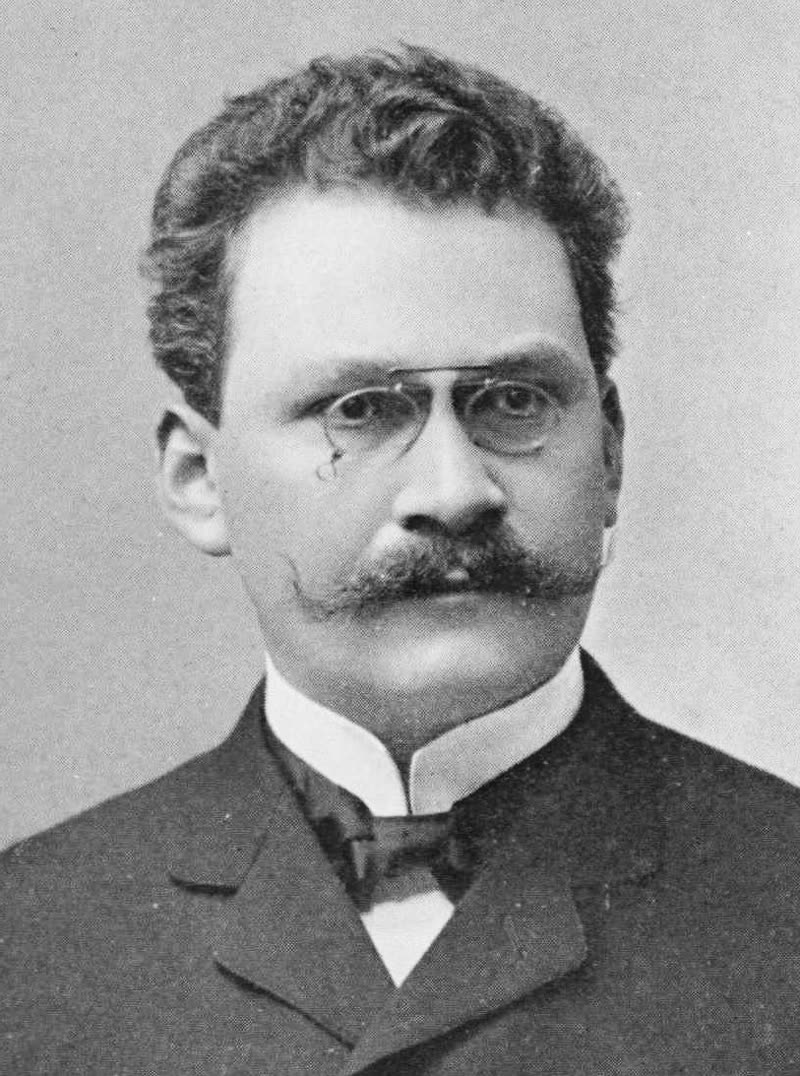
Henceforth space by itself, and time by itself, are doomed to fade away into mere shadows, and only a kind of union of the two will preserve an independent reality.
- 1905Einstein derives time dilation from the two postulates.
- 1908Minkowski gives it a geometry, and proper time a meaning as a kind of length.
- 1911Langevin poses the travelling twin, and answers it correctly straight away.
- 1941Rossi and Hall measure muon survival on a mountain — the first clear laboratory-scale confirmation.
- 1971Hafele and Keating fly caesium clocks around the world in both directions.
- nowParticle accelerators rely on it hourly; unstable particles at 0.999c live hundreds of times longer than at rest.