The Michelson–Morley experiment
The most famous null result in physics: they built an instrument sensitive enough to find the answer, and found nothing.
- Explain why nineteenth-century physicists were sure an aether had to exist
- Describe how an interferometer turns a tiny time difference into something you can see
- Say what the experiment predicted, what it measured, and why the gap mattered
By the 1880s, light was settled business. Maxwell had shown it was a wave in the electromagnetic field, Hertz had made and detected some in his laboratory, and the equations worked beautifully. There was just one loose thread, and everybody knew about it.
Every other wave anyone had ever met waved in something. Sound waves are moving air; take the air away and there is silence. Ocean waves are moving water. A wave, as the word was understood, was a disturbance travelling through a medium. So what was doing the waving when light crossed the emptiness between here and the Sun?
The answer physicists gave was the luminiferous aether — a substance filling all of space, undetectable by any other means, whose entire job was to be the thing light waves in. It sounds like a dodge. It was not an unreasonable one: the alternative was a wave with nothing to wave in, which at the time nobody could make sense of at all.
That last step is the one that made the aether testable. Swim upstream and back in a river and the round trip takes longer than swimming the same distance across the current and back. The same should be true of light. Send a beam out and back along the direction of the Earth’s motion, and another out and back at right angles, and the two round trips should take very slightly different times.
Turning a nothing into a something
The difference is preposterously small. The Earth moves at about one ten-thousandth of the speed of light, and the effect goes as the square of that — one part in a hundred million. No clock in 1887 could measure a time difference like that. No clock today could, directly.
Albert Michelson’s insight was that you do not need a clock. You need light to compare itself. Split a beam in two, send the halves down two perpendicular arms, bounce them back, and recombine them. If one half arrives a fraction of a wavelength behind the other, the two waves interfere, and the result is a pattern of bright and dark bands. Shift the timing by a single wavelength — 0.00000055 metres — and the bands visibly move.
The experiment tried to measure the speed of light in different directions and compare the numbers.
It never measures a speed at all. It compares light with light, and reads the answer off a pattern of bands. That is why it could detect a difference a hundred million times smaller than anything a clock of the era could resolve.
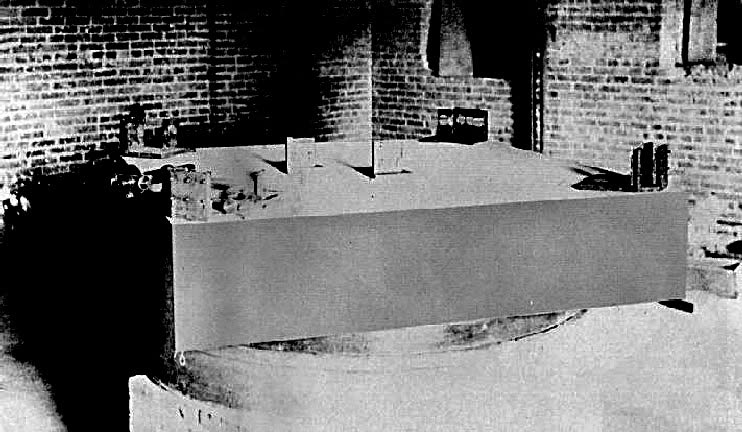
Case Western Reserve University, circa 1887. Public domain
This is the apparatus. The arrows are the aether wind blowing past as the Earth moves; the table turns inside it. Start by pressing Turn the apparatus and watching the bands.
With the real numbers loaded — the Earth’s actual orbital speed, and the 11-metre light path Michelson and Morley achieved by folding the beam back and forth across a stone slab — aether theory predicts the bands should swing by about four tenths of a fringe as the table turns through a right angle. Their instrument could see a shift of about one hundredth. The prediction was forty times larger than the noise.
What happened
The Michelson–Morley experiment
- The question
- How fast is the Earth moving through the luminiferous aether, and in which direction?
- The apparatus
- A sandstone slab 1.5 m square, floated on a bath of mercury so it could be turned smoothly without flexing. A beam of yellow light was split in two, sent down perpendicular arms, folded back and forth by mirrors to give each an 11 m path, then recombined into a fringe pattern viewed through a telescope. Readings were taken continuously as the slab rotated.
A fringe shift of about 0.4 as the apparatus turned through 90°, varying with the time of day and the season as the Earth’s motion swung relative to the aether.
A shift of at most about 0.01 fringes — and even that was within their drift and noise. Repeated at different hours and different times of year, always the same. Nothing.
How sure could they be? Their instrument resolved roughly one hundredth of a fringe, so the measurement placed the Earth’s speed through the aether below about 8 km/s — well under the 30 km/s it was known to be travelling around the Sun. Modern versions using optical resonators have pushed the bound down by a further factor of 10¹².
The one thing the experiment could not return was zero, and zero is what it returned. Either the Earth was somehow stationary in the aether — untenable, since six months later it is moving the opposite way — or the aether was not there. It took eighteen years and Einstein to say plainly what the result had been saying all along.
Michelson considered it a failure. He had set out to measure a quantity and had come back without it, and he said so. The experiment is now generally reckoned the most successful failed experiment in the history of science, and it won him the 1907 Nobel Prize — the first ever awarded to an American in the sciences.
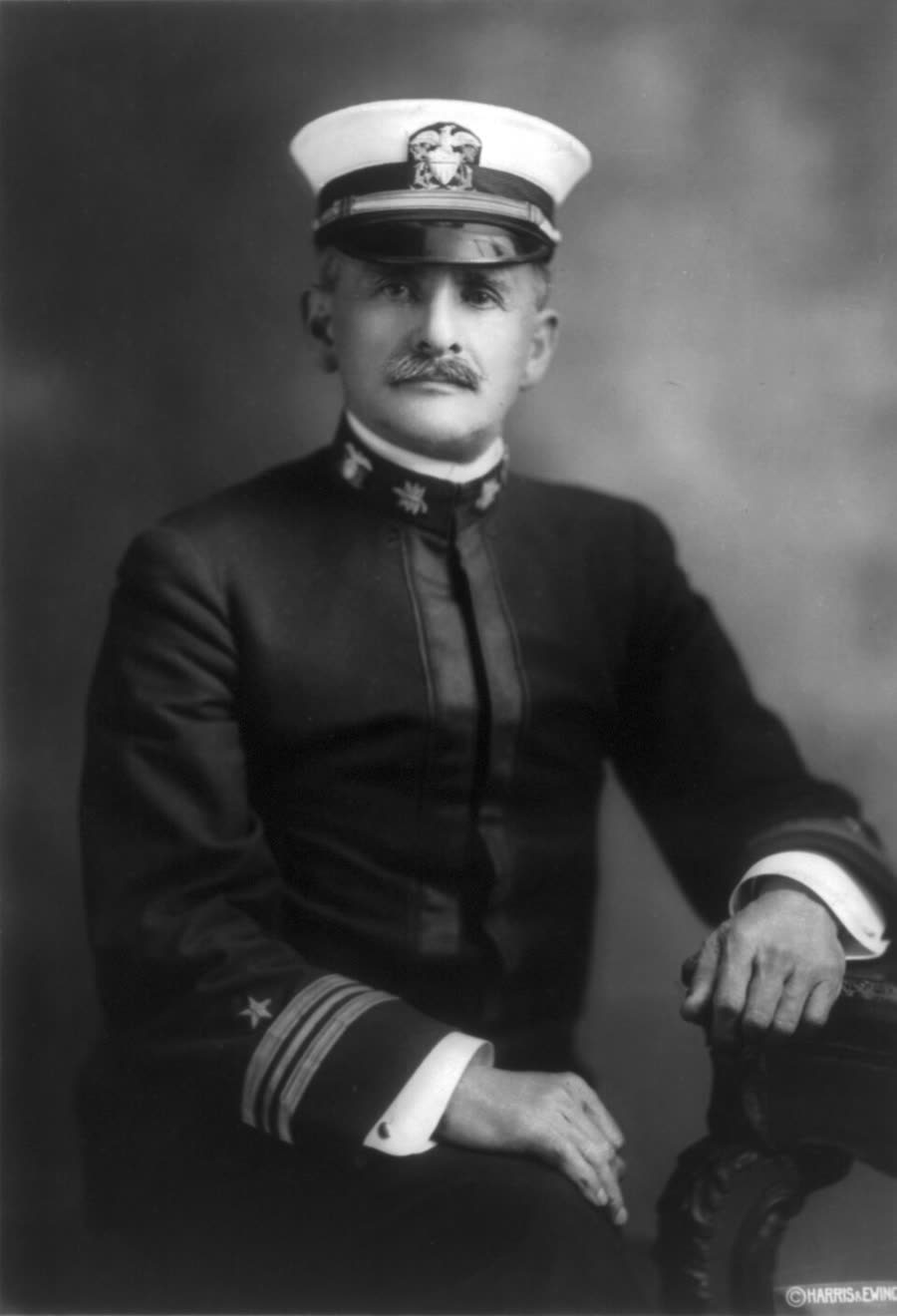
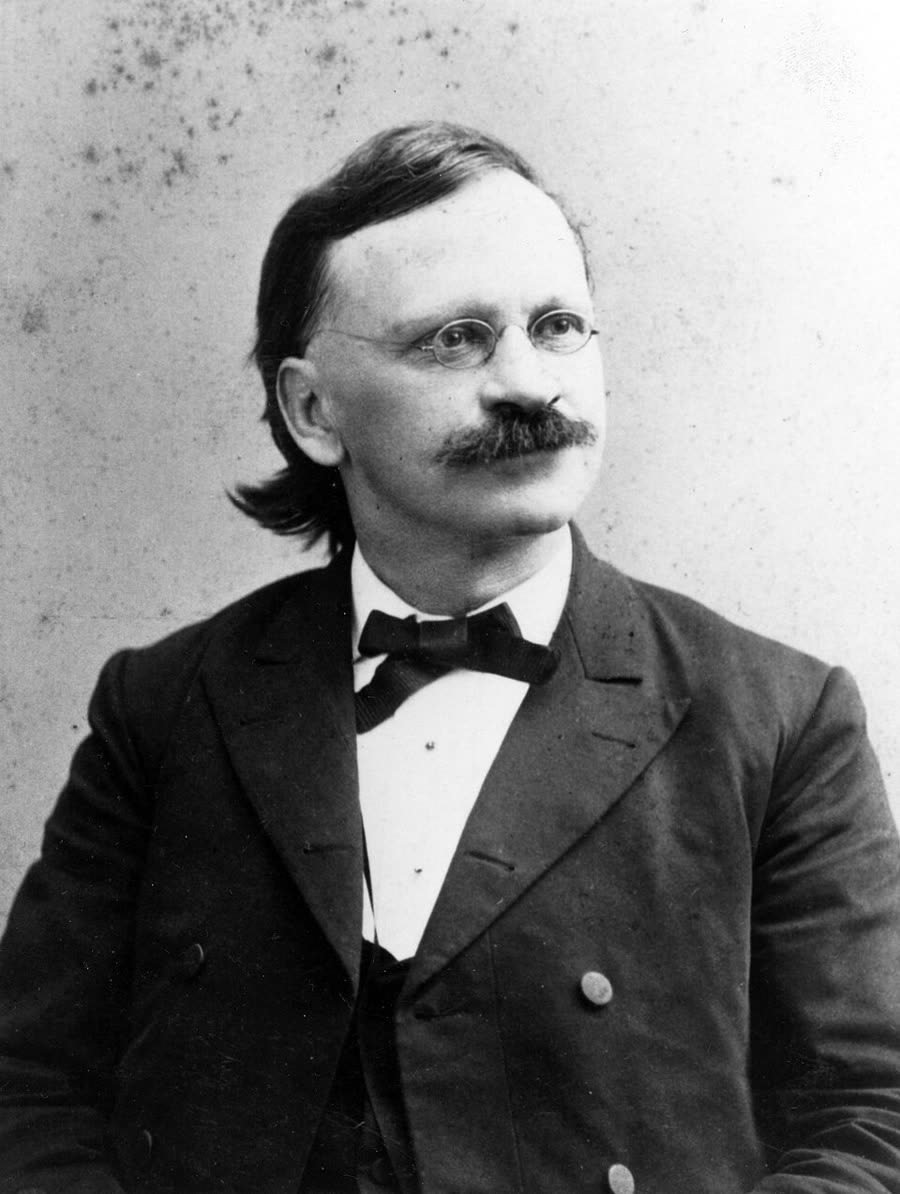
The experiments on the relative motion of the earth and the ether have been completed and the result decidedly negative.
Now switch the toggle to what they measured and turn the table again. Then switch back. The difference between those two behaviours is the entire content of the result.
This is the same instrument. LIGO is a Michelson interferometer — split the beam, send it down two perpendicular arms, recombine it, and watch the fringes — built at four kilometres an arm instead of eleven metres. Seeing the modern version makes the point that Michelson and Morley did not fail: they built an instrument so good that a century later we are still using its design, and it now measures a length change of one part in ten to the twenty-one.
What came next
The first responses were attempts at rescue rather than surrender. FitzGerald, and independently Lorentz, suggested that objects moving through the aether physically contract along the direction of motion — by exactly the amount needed to cancel the effect. It looks like special pleading, and at the time it largely was. The remarkable thing is that the contraction formula they wrote down turned out to be correct.
- 1881Michelson’s first attempt, in Potsdam. Too small and too shaky; the result is suggestive but not conclusive.
- 1887The Cleveland experiment with Morley. A far more sensitive instrument returns a firm null result.
- 1889FitzGerald proposes that moving bodies contract, cancelling the expected shift.
- 1892Lorentz arrives at the same contraction independently and develops it into a full theory.
- 1905Einstein drops the aether altogether and takes the constancy of light as a starting assumption.
- 1907Michelson receives the Nobel Prize in Physics.