Adding up the heat
The heat released by a reaction does not depend on the route taken, which lets you measure changes you cannot perform. Hess found this in 1840, a decade before anyone could say why it should be true.
- State Hess’s law, and say what makes enthalpy route-independent when heat itself is not
- Work out the enthalpy of a reaction nobody can perform, from two that anyone can
- Explain why the law was found a decade before the principle that explains it
- Read an enthalpy level diagram, and check a cycle by taking both routes
Chemistry had learnt to weigh things, and weighing had just settled its longest argument. But every reaction plainly produced something else as well, and nobody could put it on a balance. Heat. A flame gives it out, quicklime slaked with water gives it out, and mixing acid into water gives out enough to crack the vessel if you are careless. It was obviously a quantity — twice the fuel gave twice the effect — and there was no instrument for it. Lavoisier and Laplace built one, in the winter of 1782–83. Two nested containers packed with crushed ice, with the reaction in the innermost chamber. Heat coming out of the reaction melted ice; the meltwater ran out of a tap at the bottom; you weighed the water. Every gram of it stood for a fixed quantity of heat, because melting ice takes the same amount every time. They burnt charcoal in it. They put a guinea pig in it and measured the heat of breathing, and found it agreed roughly with burning charcoal that produced the same carbon dioxide — which is a startling result to get in 1783, and Lavoisier drew the right conclusion from it. They also stated something that turns out to matter here: the heat needed to decompose a compound is equal to the heat given out when it forms. Run the change backwards and the books close. That is the first hint that these numbers are properties of the substances rather than of the operations.
Now the difficulty this lesson exists to get round. To measure the heat of a reaction, you must actually run that reaction: on its own, to completion, with nothing else happening in the vessel and no product left over that you did not intend. A great many of the reactions a chemist cares about will not oblige. Some stop halfway, leaving both sides present and a heat that belongs to a mixture. Some give more than one product. Burn carbon in a limited supply of air and you get carbon monoxide and carbon dioxide together, in a ratio that depends on the temperature, the draught and the shape of the fire. Whatever heat you measure belongs to that particular mixture on that particular day. Some need conditions no calorimeter survives — thousands of atmospheres, or hours at white heat. So the heat of those reactions is not a small quantity, or an uncertain one. It is a quantity you cannot go and get. And it is a quantity chemistry needs, because you cannot say which of two routes to a product costs less without it.
The heat of diluting sulphuric acid, in one step and in several
- The question
- If you carry out the same overall change by two different sequences of operations, do you get the same total quantity of heat?
- The apparatus
- Concentrated sulphuric acid, water, and a calorimeter. In one run, the acid is diluted to its final strength in a single addition and the heat measured. In the other, the same final dilution is reached in several separate additions, with the heat of each step measured and the steps added up.
Nothing in particular was predicted, because there was no principle to predict from. Heat was widely thought to be a substance — caloric — squeezed out of bodies as they combined, and on that picture there is no obvious reason why the total should not depend on how the squeezing was done.
The sum of the steps matched the single step, as closely as the calorimeter could distinguish them. The same held for his neutralisations: the heat of a reaction was fixed by its starting and finishing states and by nothing else.
How sure could they be? The agreement is the entire result, so its quality is the whole question. Hess’s calorimetry was good to a per cent or so — crude beside a modern bomb, and far better than the difference he was looking for would have been if the totals genuinely depended on the route. He repeated the comparison on several systems before publishing.
It makes the heat of a reaction a property of the two states rather than of the procedure — which means it can be added, subtracted, and obtained by arithmetic from other reactions. A quantity you cannot measure directly stops being unavailable and becomes a matter of finding two you can.
The picture to carry is a hill. Walk from the car park to the summit and the height you gain is fixed by those two places. Straight up the face, round by the long ridge, or with a detour to a café halfway down — the difference in altitude comes out the same every time. It is a property of where you started and where you stopped. The distance you walked is not like that at all. The ridge is four times as long as the face. Enthalpy is the altitude. A quantity with this property is called a state function: it has a definite value in each state, so a change in it is a difference between two numbers, and differences do not remember paths. That is the whole of Hess’s law, and it is why the diagram below is drawn as levels rather than as a story. There is no time axis in it. There is only how high each state sits.
Two arrows are solid, because those are burns you can do in a calorimeter. One is dashed, because nobody can. Press Solve by difference and watch the dashed one acquire a number.
That is not a conjuring trick kept for one awkward compound. It is how the tables were built. Enthalpies of formation are mostly unmeasurable directly. Making methane by heating graphite with hydrogen is not something anyone does; the equilibrium is poor and the reaction is slow to the point of not happening. So nobody has ever measured the heat of forming methane from its elements. Enthalpies of combustion are almost all easy. Put a weighed sample in a steel bomb, fill it with oxygen at thirty atmospheres, fire it electrically, and measure the temperature rise of the water tank it is sitting in. Berthelot had this working by 1881, and heats of combustion were soon being published by the thousand. So you burn methane, you burn graphite, you burn hydrogen, and you subtract. Three measurements you can make, standing in for one you cannot. Open any data book at the table of standard enthalpies of formation and you are looking at the output of that subtraction, done many thousands of times.
Walk the direct route, then press Take the long way and walk it again. The running total is the height of the marker, and nothing else.
Hess’s law is a consequence of the first law of thermodynamics.
It is, and that is not how it was found. Look at the dates. Hess published in 1840. Mayer argued that heat and work are the same currency in 1842 and was largely ignored. Joule measured the exchange rate over the middle of that decade. Helmholtz generalised it into conservation of energy in 1847, and Clausius set out the first law in 1850. There was no first law in 1840 for Hess to deduce anything from — energy was not yet a thing that was conserved, and heat was still widely thought to be a fluid. Hess measured a regularity, repeated it on several systems, satisfied himself it was general, and published it. Ten years later the rest of physics arrived and explained why it could not have come out any other way. That order — a solid empirical regularity first, the principle that accounts for it afterwards — is much commoner in science than the tidy retelling suggests, and it is worth noticing when it happens, because a law found this way is believed for reasons that survive even if the explanation later changes.
The reaction that cannot be run
Two combustion enthalpies, both straightforward bomb-calorimeter measurements: C(graphite) + O₂(g) → CO₂(g) and CO(g) + ½O₂(g) → CO₂(g). What is ΔH for C(graphite) + ½O₂(g) → CO(g) — the reaction nobody can perform cleanly? Give it in kJ/mol, with its sign.
- Burning graphite to CO₂
- ΔH = −393.51 kJ/mol
- Burning CO to CO₂
- ΔH = −282.98 kJ/mol
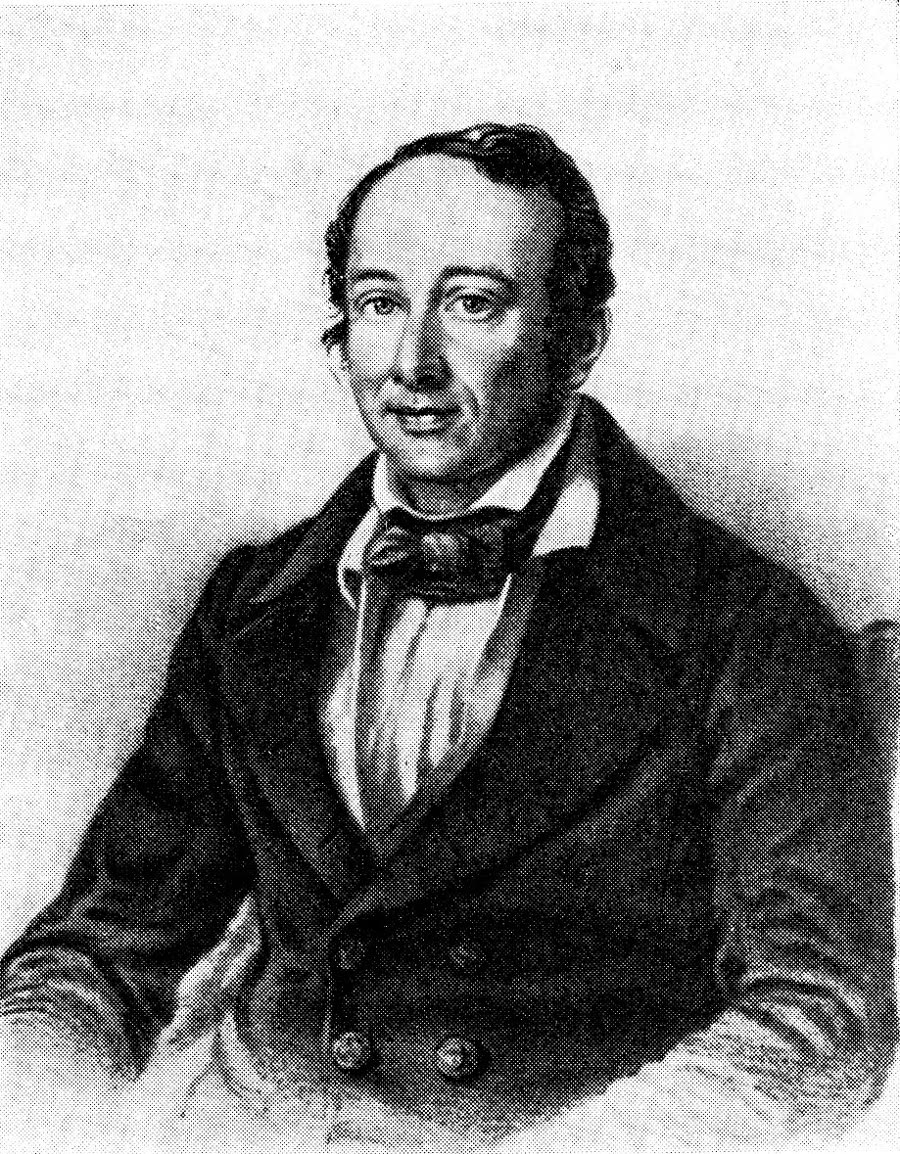
When a combination takes place, the quantity of heat evolved is constant, whether the combination occurs directly or indirectly and in stages.
- 1783Lavoisier and Laplace melt ice to measure heat, and state that decomposing a compound costs exactly what forming it gave out.
- 1840Hess dilutes sulphuric acid in one step and in several, gets the same total, and publishes the law of constant heat summation.
- 1842Mayer argues that heat and work are the same currency. Almost nobody reads him.
- 1845Joule’s paddle wheel puts a number on the exchange rate between them.
- 1847Helmholtz, Über die Erhaltung der Kraft: conservation of energy as a general principle.
- 1850Clausius states the first law of thermodynamics. Hess dies the same year, aged 48, without ever seeing why his law was true.
- 1881Berthelot’s bomb calorimeter. Heats of combustion begin to be published by the thousand, and the tables fill up.
- 1909Kamerlingh Onnes gives the quantity its modern name: enthalpy.