A theory that worked
Phlogiston is the standard example of a scientific idea that was simply wrong. It is a much more interesting example of one that was wrong and useful — it explained burning, rusting, smelting and breathing with a single substance, and it survived a fatal measurement for over a century.
- State what phlogiston was supposed to be, and the five things it explained at once
- Explain why the smelting cycle was strong evidence for it
- Say what the weight anomaly was, and why nobody treated it as fatal
- Recognise the difference between patching a theory and abandoning one
Start in 1660, before there is anything to laugh at. Fire is not a process. It is a substance — one of the four elements — and things burn because fire is in them. That sounds primitive until you ask what else the evidence supports. Wood burns and leaves ash, and the ash weighs a small fraction of what the wood did. Something has plainly departed. Charcoal burns away to almost nothing. Whatever is departing, charcoal is nearly all of it. A candle in a sealed jar goes out long before the wax is gone, as though the air had filled up with whatever was coming off. A mouse in a sealed jar dies, and does so faster if a candle is burning in there too. Whatever the candle emits, the mouse emits it as well. Every one of those points the same way: burning is something leaving. That is not a foolish reading of the evidence. It is the obvious one, and it takes a very specific measurement to overturn it.
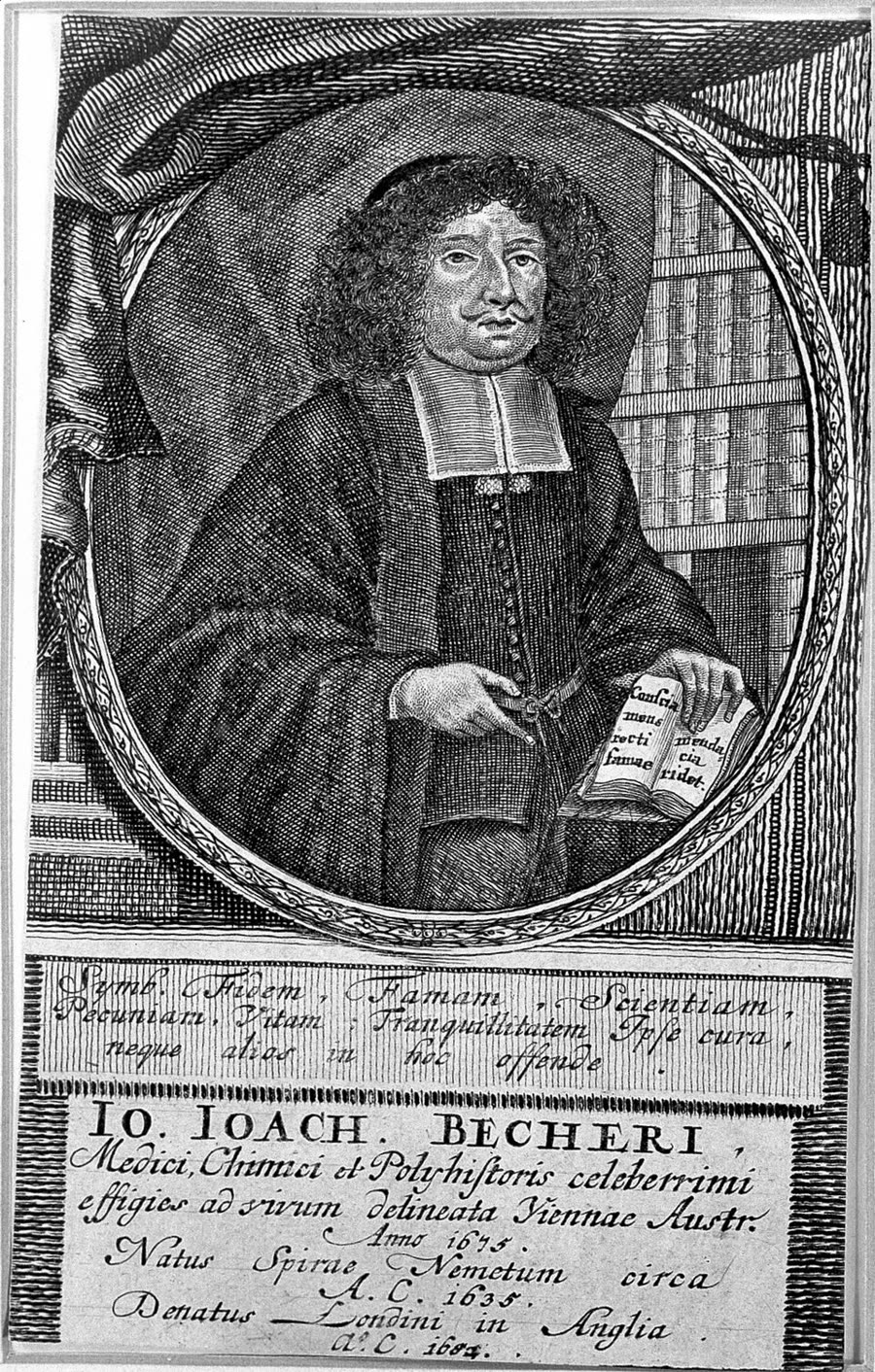
Johann Becher proposed the substance in 1667 and called it terra pinguis, oily earth. Georg Ernst Stahl developed it and, around 1703, gave it the name that stuck: phlogiston, from the Greek for burnt. The claim is a single sentence. Everything combustible contains phlogiston, and burning is the escape of it. What that one sentence buys you: Combustion. Wood, oil and charcoal are rich in phlogiston. They burn until it is gone; the ash is what is left. Calcination. A metal is a calx — an earthy powder — combined with phlogiston. Roast the metal and the phlogiston leaves; the calx remains. This is why every metal gives a powder and the powders behave like a family. Smelting. Heat a calx with charcoal and the metal returns, because charcoal hands over the phlogiston the calx is missing. Why a flame dies in a closed vessel. Air can absorb phlogiston, but only so much. Saturate it and burning stops. Why breathing resembles burning. Respiration unloads phlogiston into the air. A sealed jar saturates, and the animal dies, for the same reason the candle goes out. One substance. Five phenomena that had never before been connected, now obviously the same phenomenon. This is what people mean when they say a theory unifies.
Reduction of a calx with charcoal
- The question
- A metal roasted in air becomes a useless powder. Can the metal be recovered from the powder, and if so, what has been given back to it?
- The apparatus
- A crucible, a calx — litharge from lead, or the grey powder from tin — and powdered charcoal. Mix, cover, and heat strongly. The operation is old, reliable, and the economic basis of the metals trade.
Under phlogiston: charcoal is nearly pure phlogiston and a calx is a metal missing its phlogiston, so heating them together must restore the metal. The prediction is specific — charcoal should work, and substances poor in phlogiston should not.
The metal comes back. Reliably, repeatably, and on an industrial scale. Substances that burn well are exactly the substances that reduce a calx, which is precisely what the theory requires.
This is phlogiston’s best result and the reason it was believed. It takes the oldest industrial process in the world and makes it a special case of the same idea that explains a candle. The direction of transfer is the only thing wrong with it — and nothing in this experiment can reveal the direction, because nobody is weighing the gas.
And there was one fact that would not fit. When a metal is calcined, the calx is heavier than the metal was. That is the wrong sign. Losing a substance should make a thing lighter, and the discrepancy is not marginal — tin gains about a quarter of its own weight again, which any assay balance in Europe could see. Boyle had reported it in 1673, and it had been confirmed many times over. So: a theory that explains five things beautifully, and predicts the sign of a sixth measurement backwards.
Run the sealed calcination with both theories on the board. Read the middle row carefully before the other two.
On why tin and lead increase in weight when calcined
- The question
- An apothecary had asked Rey why calcined tin weighs more than the tin did. Where does the extra weight come from?
- The apparatus
- A balance, tin and lead, and a fire. No laboratory, no institution, no correspondence network — a country doctor answering a question a colleague had put to him.
On the prevailing view, nothing in particular: the weight gain was a known curiosity without an accepted cause.
Rey confirmed the increase and concluded that it came from air, which had been thickened and made to adhere to the calx — and that the process must therefore have a limit, because only so much air can attach.
That is essentially the right answer, including the part about the reaction being limited, published as a short book in 1630. It sank without trace. Rey had no laboratory, no institutional standing and no way to make anyone read him, and phlogiston had not even been proposed yet — there was no argument for his answer to be an answer to. Being right early and being heard are different achievements, and this site is mostly about the second one.
So how do you keep a theory whose central prediction has the wrong sign? You add something. The proposals were not stupid: Phlogiston is lighter than air. A body containing it is buoyed up, like a hand holding a balloon; let the phlogiston go and the body settles at its true, greater weight. Louis-Bernard Guyton de Morveau argued this in 1772, and it is a genuine physical mechanism, not a dodge. It is also testable, and it fails — the effect is orders of magnitude too small. Phlogiston has negative weight. Bolder, and it fits the data exactly, at the cost of a substance unlike anything else in the world. Something else arrives as the phlogiston leaves. This one is very nearly right. It just needs the phlogiston removed from the sentence.
The size of the discrepancy
Phlogiston predicts that a calx is lighter than the metal it came from. Tin calcines completely to SnO₂. By what percentage of its original mass does the tin actually gain? This is the number the theory had to explain away.
- Reaction
- Sn + O₂ → SnO₂
- Molar mass, tin
- M(Sn) = 118.71 g/mol
- Molar mass, oxygen
- M(O₂) = 32.00 g/mol
- 1630Jean Rey publishes the right answer — the weight comes from air — and is ignored.
- 1667Becher proposes terra pinguis, the oily earth that leaves a burning body.
- 1673Boyle measures the weight gain in a sealed vessel, but opens it before weighing.
- 1703Stahl names it phlogiston and builds it into a system that will run chemistry for seventy years.
- 1772Guyton de Morveau explains the weight gain by buoyancy: phlogiston is lighter than air.
- 1774Lavoisier weighs a sealed retort before opening it.
- 1783"Réflexions sur le phlogistique": Lavoisier stops working around the theory and attacks it.
- 1800Priestley, who made oxygen, is still defending phlogiston. He never stopped.