Bread from air
Everything in Act 7 pushed against everything else, and two men found the one corner of the space where it works. It now feeds about half the world, and the man who built it also built the gas that was used at Ypres.
- Explain why the ammonia equilibrium and the ammonia rate cannot both be satisfied
- Say what the catalyst does, and what it cannot do
- Describe why the reaction vessel — not the chemistry — was the hard part
- Give an honest account of what the process made possible, in both directions
In 1898, William Crookes told the British Association that the world was going to run out of bread. Not for want of land. For want of nitrogen. Every crop takes nitrogen out of the soil, and every harvest carries it away; put it back or the yield falls. In 1898 there were two ways to put it back at scale, and both were being consumed faster than they could be replaced. Guano — seabird droppings, metres deep, mined off islands in the Pacific — had been shipped to Europe by the million tonnes since the 1840s and the best deposits were already stripped. Chile saltpetre, sodium nitrate from the Atacama desert, was the other, and it was a single deposit in a single country. Britain and Germany both depended on it and neither controlled it. Meanwhile four-fifths of the air is nitrogen, and it is inert to a degree that is genuinely remarkable: the triple bond in N₂ is one of the strongest in chemistry, and the molecule will sit in a room full of hydrogen forever without doing anything. Crookes called its fixation "one of the great discoveries awaiting the ingenuity of chemists". He put the crisis around 1931.
Here is why it had not been done, and it is a summary of this entire act. N₂ + 3H₂ ⇌ 2NH₃ The reaction gives out heat. ΔH is about −92 kJ per mole of reaction. Heating an exothermic equilibrium destroys it, so the yield wants the mixture cold. The reaction is hopelessly slow when cold. Breaking that triple bond has a large activation barrier, and at room temperature nothing measurable happens in a human lifetime. So the rate wants the mixture hot. Four moles of gas become two. Compression therefore shifts the equilibrium towards ammonia, and this is the one lever that helps without a penalty in chemistry. The penalty is in metallurgy: nobody in 1900 could hold hydrogen at hundreds of atmospheres and several hundred degrees inside a vessel that stayed shut. And even at equilibrium you do not get much. At any temperature fast enough to be useful, the equilibrium mixture is mostly unreacted nitrogen and hydrogen. Every lever moves two things, and one of them the wrong way. There is no setting where all three constraints are satisfied. There is not a setting where two of them are.
Drag the temperature from one end to the other and try to find a good operating point. There isn’t one — the exercise is to convince yourself of that.
Ammonia from its elements, continuously
- The question
- The equilibrium constant says a little ammonia should exist at high pressure. Can you actually build something that makes it, at a rate you could scale?
- The apparatus
- A steel tube about the height of a person, running near 175 atmospheres and around 600 °C over an osmium catalyst, with unreacted gas recirculated rather than vented. Le Rossignol designed the high-pressure valve and much of the apparatus, which is the part that had defeated everyone else, and he is left out of nearly every retelling.
Nernst had publicly disputed Haber’s earlier equilibrium figures at the Bunsen Society meeting in 1907, arguing that the yields were lower than Haber claimed and that the whole idea was therefore hopeless. Remeasurement showed Nernst was right about the numbers — which is precisely what drove Haber to raise the pressure until they stopped mattering.
A continuous drip of liquid ammonia, on the order of a cupful an hour, sustained for hours in front of Carl Bosch and Alwin Mittasch of BASF. Roughly eight per cent ammonia in the gas leaving the tube.
How sure could they be? The demonstration is not impressive as a quantity — a cupful an hour would not fertilise a garden. What it demonstrates is that the process is continuous and self-sustaining rather than a laboratory curiosity, and that is the only question BASF needed answered before committing.
BASF bought the process, and with it essentially the entire world supply of osmium — about a hundred kilograms — because nothing else was known to work. Replacing that catalyst, and building a vessel that would survive the conditions, took another four years and is the larger half of the achievement.
Carl Bosch’s problem was the vessel, and it is the reason the process bears his name too. Hydrogen at 200 atmospheres and 450 °C does something to carbon steel that nobody had had to deal with before. The molecules dissociate at the surface and atomic hydrogen diffuses into the metal, where it reacts with the iron carbides that give the steel its strength, converting them to methane. The steel is decarburised from the inside; the methane cannot get out, so it opens cracks along the grain boundaries. The vessel loses its strength invisibly and then splits. The first test tubes at Ludwigshafen burst within days. From the outside they looked fine. Bosch’s solution is the invention that makes the process real. A liner of soft, low-carbon iron — which has almost no carbide to lose, and which carries none of the load — sits inside a carbon-steel pressure shell that never touches the hot hydrogen. And the outer shell is deliberately drilled through with small holes, so that hydrogen which does work its way through the liner escapes to the atmosphere rather than accumulating in the gap and bursting the shell from within. Small holes, on purpose, through the wall of a high-pressure vessel. It is the least intuitive design decision in the history of chemical engineering, and every ammonia plant since has descended from it. The first plant, at Oppau near Ludwigshafen, began production in September 1913, at around 30 tonnes of ammonia a day. Bosch also had to invent, more or less from scratch, the compressors, the continuous gas purification, and an industry’s worth of high-pressure practice. He received his own Nobel Prize for it in 1931.
Leave the temperature at 450 °C and push the pressure instead. Look for the point where more pressure stops helping.
How much ammonia can you actually have?
A stoichiometric mixture — 1 mol N₂ to 3 mol H₂ — is brought to equilibrium at 450 °C and 200 bar over an iron catalyst. Assume ideal gases. What percentage of the gas, by mole fraction, is ammonia? (These are the simulation’s starting conditions, so you can check yourself against it.)
- Reaction
- N₂ + 3H₂ ⇌ 2NH₃
- Temperature
- 450 °C = 723 K
- Total pressure
- 200 bar
- K_p at 723 K
- 3.80 × 10⁻⁵ bar⁻²
- Feed ratio
- 1 : 3, no ammonia present
The iron catalyst increases the yield of ammonia.
It cannot, and the reason is worth being precise about. A catalyst provides an easier route between reactants and products, and that route is available in both directions — so it multiplies the forward rate and the reverse rate by the same factor. K is the ratio of those two, so K is untouched. A catalyst that shifted an equilibrium would let you cycle a reaction back and forth between two vessels, one catalysed and one not, and extract work from the difference forever; the impossibility is not a chemical detail but a thermodynamic one. What the catalyst does buy is enormous, and entirely indirect: it makes the reaction fast enough to be worth doing at a temperature several hundred degrees below what would otherwise be needed, and a lower temperature is exactly where the equilibrium yield lives. So the catalyst raises the yield by relaxing the constraint that was forcing the temperature up — not by touching the equilibrium at all. Finding it was brute force. Alwin Mittasch ran something on the order of twenty thousand tests before settling on iron prepared from a particular Swedish magnetite, and the crucial discovery was that pure iron was poor: the ore’s impurities, alumina and potassium compounds, were doing essential work as promoters. The modern catalyst is still, in essence, that ore.
Roughly half the nitrogen atoms in your body have been through this reaction. That is not a rhetorical flourish; it is a mass balance. Nitrogen from the Haber–Bosch process goes into fertiliser, fertiliser into crops, crops into animals and people. Estimates put the fraction of the world’s population fed by synthetic nitrogen at around half, and the calculation is not seriously disputed — the world’s population could not have gone from 1.6 billion in 1900 to 8 billion without it. The scale is correspondingly enormous. Ammonia production runs at something like 180 million tonnes a year, and consumes on the order of 1–2 per cent of the world’s primary energy — most of it as natural gas, which supplies both the hydrogen and the heat. And the same nitrogen does damage. What crops do not take up runs off into rivers and coastal waters, where it feeds algal blooms whose decay strips out the oxygen and leaves dead zones. Some leaves the soil as nitrous oxide, a greenhouse gas roughly 300 times as potent as carbon dioxide per molecule, and the largest human-driven perturbation to the nitrogen cycle in the planet’s history is now about a century old. It is not possible to be simply pleased about this. It is also not possible to be simply appalled: the alternative to the process is not a cleaner world, it is a much emptier one.
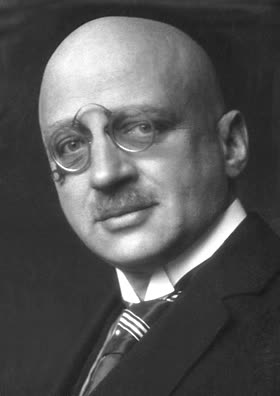
The rest has to be said plainly. Haber directed Germany’s chemical weapons programme. He was not a reluctant participant, an adviser, or a scientist whose work was taken and misused. He organised it, from his institute in Dahlem, and he was in the field for its first use. On 22 April 1915, at Ypres, roughly 168 tonnes of chlorine were released from thousands of buried cylinders along a front several miles wide, against French and Algerian troops. Haber supervised the attack in person. Nobody counted the dead reliably; the estimates run from about a thousand upwards. He was promoted to captain shortly afterwards. His wife, Clara Immerwahr, was a chemist. She had been the first woman to take a doctorate at the University of Breslau, in 1900, summa cum laude, and had then spent fourteen years without a laboratory of her own. On the night of 1–2 May 1915, days after Ypres and after a party at their house, she went into the garden and shot herself with her husband’s service pistol. Their son Hermann, aged thirteen, found her. Haber left for the Eastern Front the following morning. Whether her death was a protest against the gas war, or the end of a long unhappiness in a marriage that had cost her a career, or both, is disputed among historians; the letters she left have not survived. Hermann Haber took his own life in 1946.
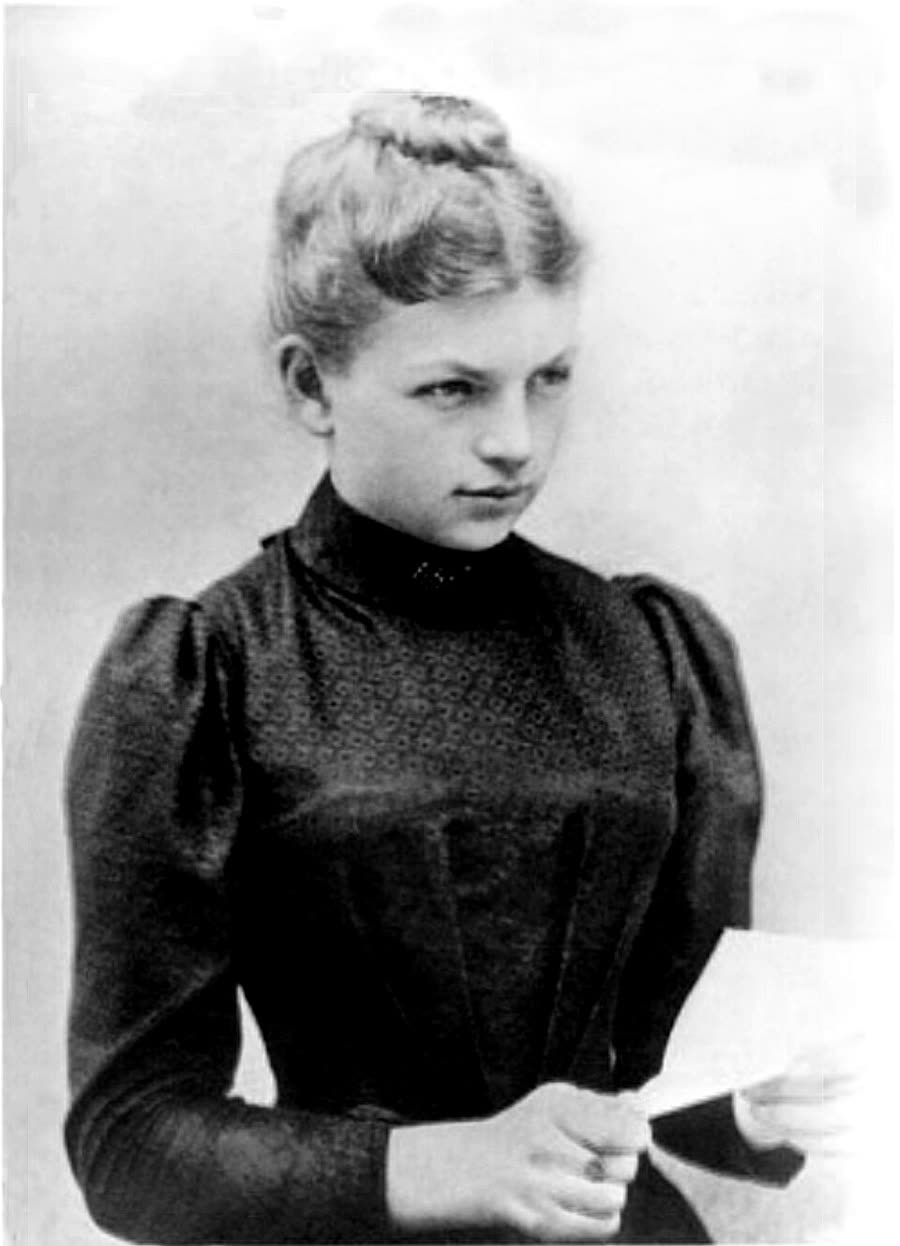
He was awarded the Nobel Prize in Chemistry for 1918, for the synthesis of ammonia from its elements. It was announced the following year, and a number of scientists in France, Britain and the United States protested or refused to attend. The Nobel committee’s position was that the prize was for the chemistry. In the 1920s his institute worked on cyanide fumigants, producing a preparation called Zyklon A. A later, modified version — Zyklon B, distributed through an organisation Haber had helped establish — was used in the gas chambers at Auschwitz and elsewhere. Members of Haber’s own extended family were murdered in the camps. In April 1933 the new German government began removing Jews from public employment. Haber had been baptised a Lutheran at twenty-three and had served at the front, which exempted him personally, but the law required him to dismiss the Jewish scientists in his institute. He resigned on 30 April rather than do it, writing that for more than forty years he had chosen his collaborators for their ability and character and not for their grandmothers, and that he was not going to change that method in the last years of his life. He left Germany, spent a period in Cambridge, and accepted an invitation from Chaim Weizmann to direct a research institute in Rehovot. He got as far as Basel, where he died of heart failure on 29 January 1934, aged sixty-five. All of that is one man.
In peace time a scientist belongs to the world, but in war time he belongs to his country.
- 1898Crookes warns the British Association that nitrogen, not land, is the limit on the food supply.
- 1901Le Chatelier abandons his own attempt at ammonia synthesis after an explosion.
- 1907Nernst publicly disputes Haber’s equilibrium figures, and turns out to be right — which pushes Haber to high pressure.
- 19092 July: a bench apparatus at Karlsruhe drips liquid ammonia continuously, over osmium, in front of BASF.
- 1910Mittasch begins the catalyst search that will run to some twenty thousand tests before iron wins.
- 1913September: the Oppau plant starts up, behind Bosch’s lined and deliberately perforated reactor.
- 1914The British blockade cuts Germany off from Chilean nitrate. Ammonia becomes explosives as well as fertiliser.
- 191522 April: chlorine at Ypres, supervised by Haber. 2 May: Clara Immerwahr shoots herself.
- 1918The Nobel Prize in Chemistry, awarded the following year, and protested.
- 1931Bosch shares the Nobel Prize for high-pressure chemistry.
- 1933Haber resigns rather than dismiss his Jewish staff, and leaves Germany.
- 1934He dies in Basel, aged 65, on his way to Rehovot.